
No products in the basket.

Office furniture trends change along with workplaces. By 2025, modern office spaces will emphasise ergonomic improvements, adaptable design solutions, and environmental practices, while less useful options and antiquated office designs will be discarded. The trends for this year indicate a move toward productivity and well-being, from flexible workstations and eco-friendly materials to the decline of bulky, old-fashioned desks. These ideas will help you create a more aesthetically pleasing and functional workspace whether you’re redesigning your home office or your corporate office. Here’s a look at what’s in and what’s out, and how you can create a workspace that mirrors the needs of the worker of today.
As of 2025, employee wellness, sustainable resource development, and technological improvements have all contributed to the considerable advancements in the office furniture industry. As hybrid work becomes the new norm, multipurpose furniture is becoming more and more common. In many cases, with a hybrid workplace where people will be rotating between home and the office, furniture that readily adapts to group/team/open plan and private workspace becomes crucial. The office not only makes the best use of the available space, but it also helps to foster a more smooth working environment.
Sustainability is more than an advertising slogan; it is a fundamental need. Recycled plastics and responsibly harvested wood products are being used in office furniture designs as manufacturers place a greater emphasis on sustainability in materials and production techniques. Moving towards greener alternatives indicates a commitment to corporate social responsibility and connects with modern workplace values. Natural textures, plants, and organic shapes — the hallmarks of biophilic design — are making their way into office environments to boost mental health and productivity. In this 2025, office furniture at work will not just be for utility, it will do wonders toward making the overall work experience more pleasant.
As we strive for environmentally friendly work environments, sustainable materials are becoming a key factor in modern office design. Besides traditional wood and recycled plastics, innovators are exploring new varieties of natural materials, including mycelium-based composites and bamboo cloth. Not only does mycelium make a biodegradable alternative to traditional plastics, it also has one of a kind visual properties that can improve our workplace environments. Such rapid growth and toughness have filtered down into furniture and flooring that emphasises durability and sustainability, too.
Office spaces’ adoption of biophilic design is altering our perception of materials. By utilising natural components like cork, repurposed wood, or even living walls, designers improve employee well-being and efficiency while making involvement more tangible. Given the growing understanding of how incorporating emotion into work environments makes it easier to endure, it is only reasonable to desire both utility and emotion in such settings. By putting sustainability first, businesses are preserving material selection as a democratic design choice that prioritises the social and environmental values of their stakeholders—people and the environment—over financial gain.
Every office needs a shift because of how work has changed. Flexible office solutions and adaptable workspaces are leading the way in an office innovation that meets the constantly changing demands of today’s workforce. The need for adaptable work environments has increased dramatically as a result of the company’s emphasis on employee comfort and efficiency. These areas provide more than just workstation setups; they also feature contemporary furnishings, movable dividers, and multipurpose spaces that can be quiet corners or hotspots for collaboration. This shift reflects a wider realisation that flexible work environments, where people freely select the venues they use for their jobs, foster innovation.
The growing popularity of hybrid work models has only driven the trend further as firms struggle to balance the needs of in-office and remote employees. Flexible workplaces not only establish a better collaboration system — Nestled spaces where teams can come together for brainstorming sessions — but one of community too, giving quiet space for deep work. Furniture trends are reacting, serving the demand with designs that promote ergonomic and aesthetic items to make every room they inhabit serve not only function, but also comfort. In this respect, adaptability is a principle of organisational life rather than a function that enables us to relate differently with our places of work, ultimately paving the way for a more engaged and productive workforce in 2025 and beyond.
As 2025 draws near, the conflict between minimalism and maximalism is causing unexpected changes in the layout of workplace space. Maximalism promotes boldness, layering, and a riot of textures and colours, whereas minimalism favors simplicity and functionality with its clean lines, subdued colour palettes, and organised environments. This year, a new trend is arising: the hybrid approach, in which aspects of both styles coexist in harmony. By adjusting to the needs of various worker archetypes and creating an engaging work environment, this combination allows us to innovate and adapt while preserving order.
This move toward more hybrid approaches is not only visually healthier; it is based on understanding of how our environments impact productivity and well-being. For example, designs at workplaces that include colourful art and eclectic furniture can inspire employees to promote creativity and teamwork. Because the subtle décor of minimalist settings encourages silence and attention, they could be appropriate for work that demands a high level of concentration. The debate between minimalism and maximalism will persist as businesses attempt to replicate their methods of operation into the very fabric of their teams, making us wonder what a good workstation actually is.
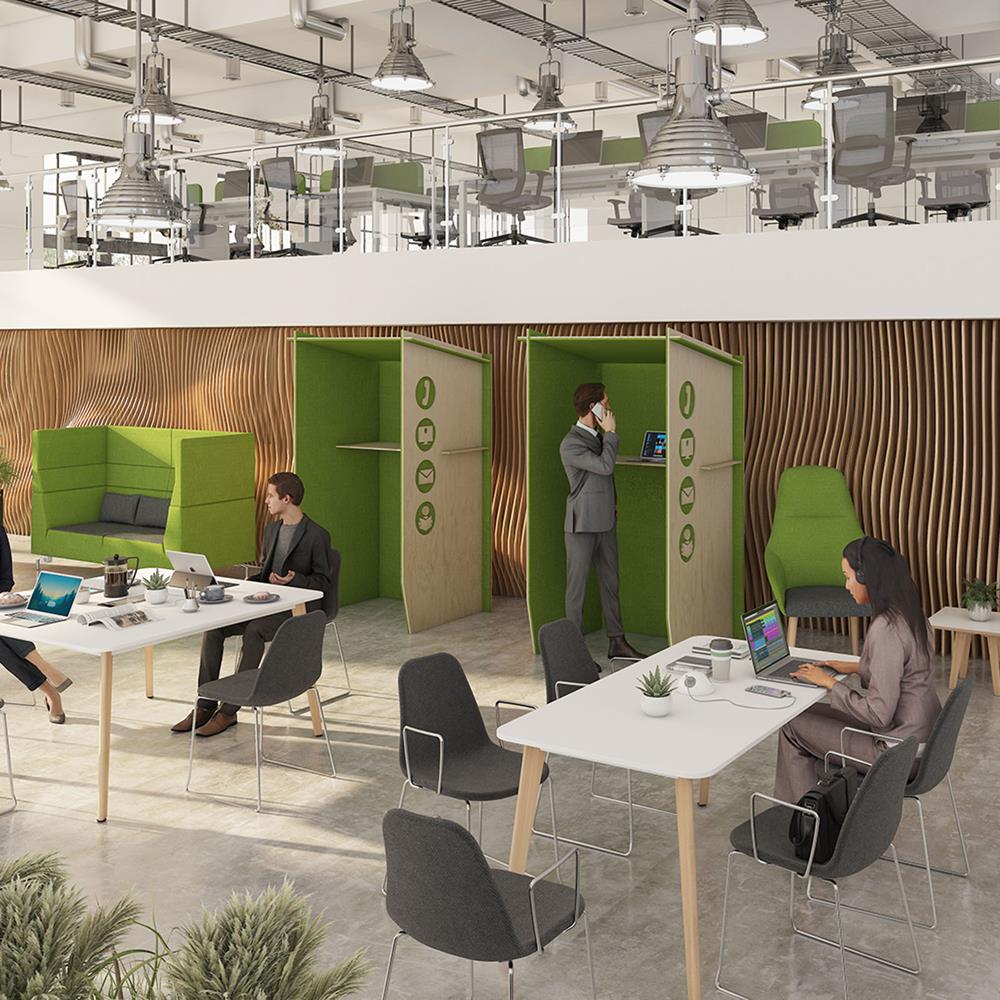

One of the highest trend types in 2025 office furniture design is the combination of the nostalgia of vintage styles with modern functionality. Mid-century aesthetics, marked by clean lines and organic forms, are resonating with a new generation of professionals looking for beauty and comfort in their workspaces. A space that features Eames lounge chairs and teak workstations, for instance, elicits a sense of antiquity but also provides a room that is both inviting and spurs on creativity and collaboration.
Historic features bring customisation to the workplace, moving away from the sterile environments of yesteryear. Witty thrifted discoveries or curated replicas bring flavor to workspaces and channel the personalities of the employees. An eco-movement has made people appreciate the quality workmanship of old — things that last longer than mass-produced objects. Having this spicy tendency leads to aesthetics and supporting of earth-friendly concepts, producing spaces both just and pretty.
The changes in office furniture trends before 2025 show a lively adjustment to our changing workspaces and ways of thinking. We are witnessing a change away from rigid, antiquated designs and toward adaptable, modular solutions that might serve a number of purposes. Sustainable materials are also on the rise, which reflect a collective desire to make an eco-friendly choice. By staying on top of current trends, you can build an effective and versatile workspace design. Switching gears — how to invest in your office space now to build an innovative and engaged culture.

Subscribe To Our Newsletter
Wakefield Office Furniture offers a wide range of Office Furniture, Storage and Desks to customers in Barnsley, Bradford, Castleford, Doncaster, Halifax, Huddersfield, Harrogate, Leeds, Pontefract, Rotherham, Sheffield and York.
